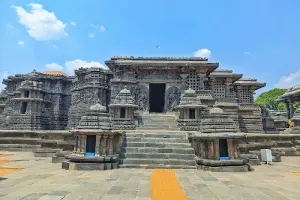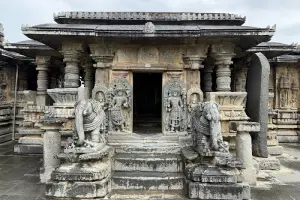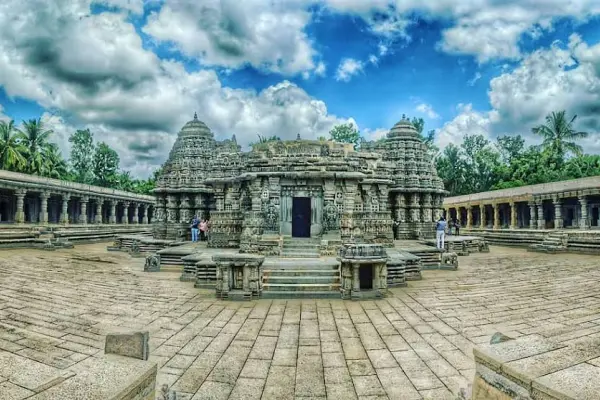
The Chennakeshava Swamy Temple at Belur was commissioned by King Vishnuvardhana in 1117 CE to commemorate his victory over the Cholas. It stands as one of the finest examples of Hoysala architecture, where every inch of the soapstone walls is adorned with detailed carvings of deities, dancers, mythical creatures, and scenes from the epics. The sanctum enshrines Lord Chennakeshava (a form of Vishnu), and the temple’s star-shaped platform gives it a unique symmetry that highlights its sculptural brilliance.
Beyond the central shrine, the complex also houses smaller temples and ornate pillars, each showcasing extraordinary craftsmanship. Visitors should pay attention to the famed Narasimha pillar (said to have once revolved on its ball-bearing base) and the stunning madanikas (celestial damsels) carved in graceful postures around the temple. Photography is allowed in the courtyard but not inside the sanctum. The temple gets crowded during the annual rathotsava (chariot festival), so mornings are best for a peaceful visit.
| Location | Google Maps |
|---|
Dress modestly as it is an active place of worship.
Footwear must be left outside the temple premises.
Local guides are available who can explain the mythology and symbolism behind the carvings—worth hiring if you want depth.
Combine the trip with Halebidu (16 km away) and Shravanabelagola (about 90 km away) for a complete Hoysala heritage trail.
| By Type | Temple |
|---|
⚠️ This content may be AI-generated and could contain misinformation. If you notice any issue or want to suggest edits, please let us know.