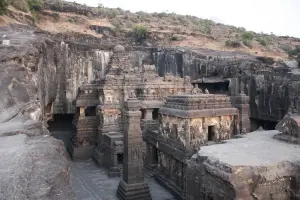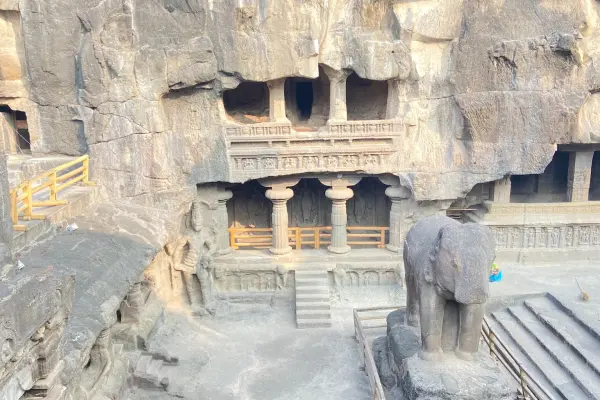
Ellora Caves, located near Aurangabad, Maharashtra, represent one of the finest examples of rock-cut architecture in India. Unlike Ajanta Caves, which are predominantly Buddhist, Ellora is unique as it houses caves dedicated to three major religions—Buddhism, Hinduism, and Jainism—coexisting harmoniously in a single complex.
The site consists of 34 caves:
Caves 1-12 – Buddhist monasteries and shrines (6th–7th century CE)
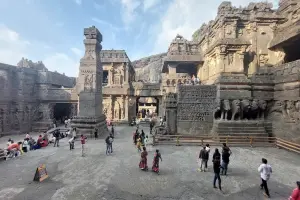
Caves 13-29 – Hindu temples, including the grand Kailasa Temple (8th century CE)
Caves 30-34 – Jain temples with intricate carvings (9th–10th century CE)
The most spectacular structure here is Kailasa Temple (Cave 16), an awe-inspiring monolithic rock-cut temple dedicated to Lord Shiva. Carved from a single rock, it is larger than the Parthenon in Greece and is considered an architectural marvel of ancient India. Other notable caves include Cave 10 (Vishvakarma or Carpenter’s Cave), featuring a grand statue of Buddha, and the Jain Caves, which showcase delicate carvings and elaborate pillars.
The Ellora Caves stand as a testament to India's rich artistic and religious heritage, attracting history buffs, art lovers, and spiritual seekers from around the world.
| Location | Google Maps |
|---|
| Location | Aurangabad, Maharashtra |
| Built By | Rashtrakuta, Chalukya, and Kalachuri dynasties (6th–10th century CE) |
| Best Time to Visit | October to March (pleasant weather) |
| Entry Fee | ₹40 (Indians), ₹600 (Foreigners) |
| Timings | 6 AM – 6 PM (Closed on Tuesdays) |
| Special Feature | Houses the world's largest monolithic rock-cut temple (Kailasa Temple) |
| By Type | Historical Site , Archaeological Site , Cave , Heritage Site , Religious Site |
|---|
⚠️ This content may be AI-generated and could contain misinformation. If you notice any issue or want to suggest edits, please let us know.