
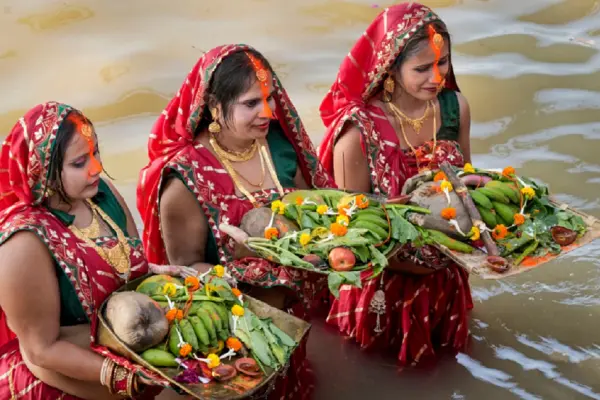
Chaiti Chhath is an important sun-worship festival that is similar in rituals and significance to Kartiki Chhath but takes place in spring (Chaitra month) instead of autumn (Kartik month). Devotees observe fasting, perform rituals at riverbanks, and offer prayers to the setting and rising sun. While Kartiki Chhath is grandly celebrated with large gatherings, Chaiti Chhath remains a more family-centric festival.
Chaitra Chhath
Chaiti Dala Chhath
The festival is observed to express gratitude to the Sun God for sustaining life on Earth and to seek health, prosperity, and well-being. It is also devoted to Chhathi Maiya, considered the protective deity of children and families. Devotees believe that observing this fast brings blessings, cures diseases, and fulfills wishes.
Spiritual and Health Benefits – The strict fasting and rituals detoxify the body and mind.
Cultural Tradition – Chaiti Chhath strengthens familial and community bonds.
Sun Worship – Reverence to Surya Dev plays a key role in Hindu traditions, and this festival is one of the most prominent sun-worship festivals.
The exact origin of Chaiti Chhath is unknown, but Chhath as a tradition dates back to ancient Vedic times, with references in the Rigveda about sun worship and rituals for prosperity. It has been practiced for thousands of years, particularly in the Gangetic plains of India.
Chaiti Chhath follows the same four-day ritual process as Kartiki Chhath, though it is celebrated on a smaller scale:
Day 1 - Nahai Khai (Holy Bath and Food Purity)
Devotees take a holy dip in a river/pond (mainly in the Ganga or local water bodies).
Only Satvik (pure, vegetarian) food is consumed.
Day 2 - Kharna (Fasting Begins)
Devotees observe a day-long fast without water and break it in the evening with Prasad (offering of jaggery-based kheer, chapati, and fruits).
The fast continues for the next 36 hours without food or water.
Day 3 - Sandhya Arghya (Evening Sun Offering)
Devotees gather at the riverbanks or water bodies to offer Arghya (prayers with milk and water) to the setting sun.
Songs dedicated to Surya Dev and Chhathi Maiya are sung.
Day 4 - Usha Arghya (Morning Sun Offering & Conclusion)
Devotees again offer prayers at sunrise.
The fast is broken after the morning rituals.
Families distribute Thekua (a special sweet dish) and other Prasad to relatives and neighbors.
Bihar, Jharkhand, Eastern Uttar Pradesh – The festival is most commonly observed in these states.
Nepal (Madhesh region) – A significant celebration occurs in Terai communities.
Delhi, Mumbai, Kolkata, and Other Cities – Migrant populations from Bihar and UP celebrate Chaiti Chhath in urban areas.
Chhath (Kartiki Chhath) – The more widely celebrated version in Kartik month.
Surya Shashti – Other Hindu sun worship festivals.
While Chaiti Chhath is not as grand as Kartiki Chhath, it holds deep religious significance for devotees. It maintains the same rituals of strict fasting, prayers, and offerings to the Sun God but is observed with less public festivity and more family-based celebrations.
| By Type | Festival , Cultural Festivals , Hindu Festivals |
|---|---|
| By Scale | Regional |
| By Duration | Multi-Day |
| By Frequency | Yearly |
⚠️ This content may be AI-generated and could contain misinformation. If you notice any issue or want to suggest edits, please let us know.