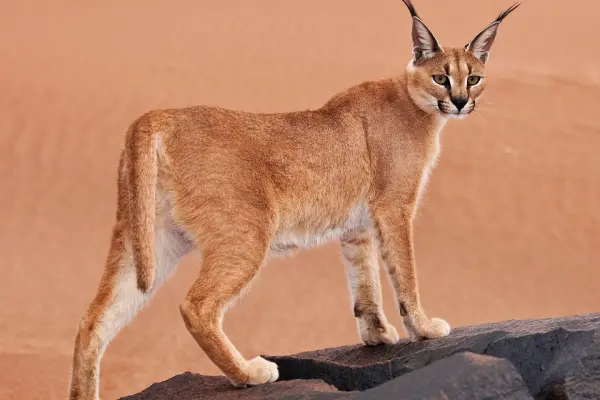
The Caracal (Caracal caracal), a medium-sized wild cat, is one of India's most elusive and lesser-known predators. Recognizable by its sleek reddish-brown coat, long legs, and distinctive tufted ears, the Caracal is a master of stealth and agility. Its name is derived from the Turkish word "karakulak," meaning "black ears", referring to its striking black-tipped, pointed ears that enhance its acute hearing.
Though primarily associated with arid landscapes, dry forests, and scrublands, the Caracal has historically been linked to royal hunting traditions in India, where it was trained to hunt birds and small prey. Today, it is an endangered species in India, facing threats from habitat destruction and declining prey populations.
The Caracal is one of the rarest wild cats in India, making it a dream sighting for wildlife enthusiasts. Its speed and jumping ability are legendary—this cat can leap over 10 feet in the air to snatch birds in mid-flight! Unlike the more famous leopards and tigers, the Caracal prefers solitude and silence, making it an expert at avoiding human detection.
While not as well-known as India's big cats, the Caracal is an important part of India's diverse wildlife and is a key predator in desert and scrubland ecosystems. Travelers interested in unique wildlife photography, birdwatching, and conservation efforts should take note of this elusive feline. Sightings are extremely rare, but the thrill of tracking this enigmatic cat in the wild is an unforgettable experience.
Spotting a Caracal in India is extremely difficult, as it is naturally shy, nocturnal, and has a low population. However, for the most determined wildlife travelers, there are a few key locations where sightings have been reported:
For a chance to see one, travelers should take early morning or late evening safaris, when these cats are most active. Hiring an experienced local guide and focusing on less-visited parts of reserves in Rajasthan and Gujarat can increase the likelihood of a sighting.
| By Behavior & Lifestyle | Nocturnal Species , Predators & Carnivores |
|---|---|
| By Geographic Region | Desert Wildlife |
| By Conservation Status | Endangered |
| By Type | Big Cats |
⚠️ This content may be AI-generated and could contain misinformation. If you notice any issue or want to suggest edits, please let us know.