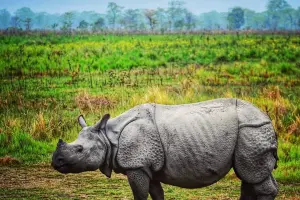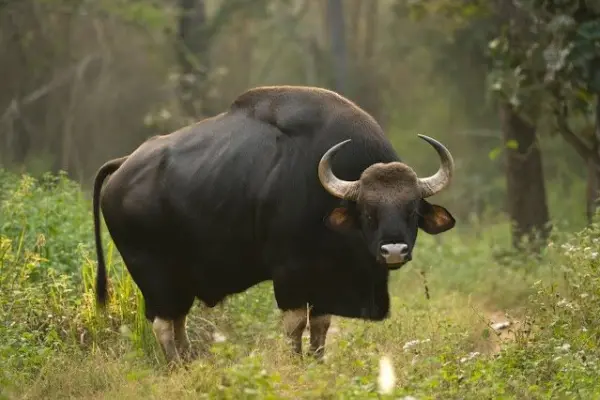
The Gaur (Bos gaurus), also known as the Indian Bison, is the largest and most powerful wild cattle species in the world. Found across India’s forests and hills, these massive herbivores are known for their muscular build, large curved horns, and striking white "stockings" on their legs. They can weigh up to 1,500 kg, towering over other wild herbivores, and are even capable of intimidating big predators like tigers.
For wildlife travelers, encountering a herd of Gaurs in the wild is an awe-inspiring sight. These gentle giants are mostly shy and avoid human interaction, but their sheer size and presence make them a bucket-list species for safari-goers in India’s national parks. Kanha, Bandipur, Nagarhole, and Periyar Tiger Reserves are among the best places to spot them in their natural habitat.
✅ Largest Wild Cattle in the World – More powerful than African buffaloes.
✅ Rare Yet Thriving in Indian Forests – A unique species found only in select regions.
✅ Crucial to the Ecosystem – A keystone herbivore that helps maintain forest balance.
✅ Exciting Wildlife Safari Experience – Often seen in tiger reserves and national parks.
✅ Photogenic and Majestic – Their massive frame and sharp horns make for stunning wildlife photography.
✔ Best Time to Visit – November to May (dry season increases visibility).
✔ Early Morning or Late Evening Safaris – Best time to catch them in action.
✔ Look for Water Sources – Gaurs frequently visit waterholes in summer.
✔ Stay Quiet & Keep Distance – Despite their calm nature, they can charge if provoked.
✔ Carry Binoculars & Camera – Great for spotting and capturing their sheer size.
The Gaur is one of India’s most underrated wildlife species, often overshadowed by big cats, yet just as majestic and thrilling to watch. Their sheer size, strength, and presence make them a must-see for nature lovers and wildlife photographers. Whether on a safari in Kanha, Bandipur, or Periyar, spotting a Gaur in the wild is an unforgettable experience! 🏞️🐃
| By Behavior & Lifestyle | Herbivores & Grazers |
|---|---|
| By Geographic Region | Himalayan Wildlife , Western Ghats Wildlife |
| By Conservation Status | Vulnerable |
| By Natural Habitat | Terrestrial Species |
| By Type | Herbivores |
⚠️ This content may be AI-generated and could contain misinformation. If you notice any issue or want to suggest edits, please let us know.