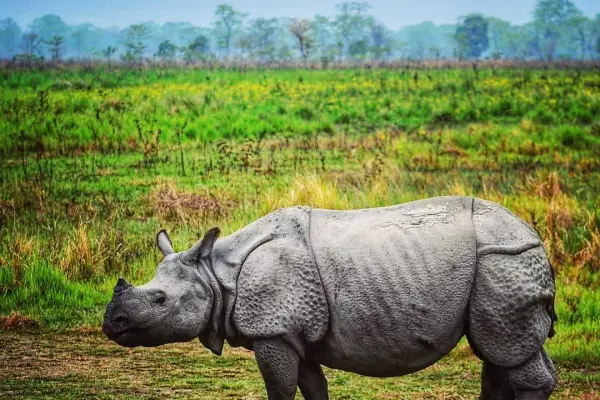
The Greater One-Horned Rhinoceros (Rhinoceros unicornis) is one of India’s most iconic and awe-inspiring wildlife species. Found primarily in the lush grasslands and floodplains of Assam, West Bengal, and Uttar Pradesh, this magnificent animal is a major draw for wildlife enthusiasts and photographers. Unlike the African rhinos, the Indian rhino is semi-aquatic, often seen grazing in wetlands or cooling off in rivers and swamps. With its thick, armor-like skin, solitary nature, and impressive horn, the one-horned rhino is a symbol of conservation success in India.
Why Travelers Should See the One-Horned Rhino?
- A Conservation Success Story – Once on the brink of extinction, its population has rebounded thanks to dedicated conservation efforts.
- Majestic & Unique Appearance – Looks like a “prehistoric” creature due to its thick, plated skin.
- Best Place in the World to See It? – Kaziranga National Park, Assam, home to over 70% of the world’s population of this species.
- Thrilling Safari Encounters – Spot them on jeep safaris, boat rides, or even elephant-back safaris in the grasslands.
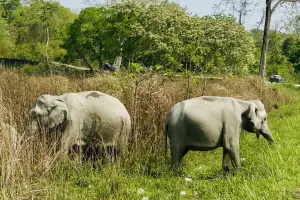
- Coexists with Other Iconic Wildlife – Rhinos share their habitat with tigers, elephants, wild buffalos, and swamp deer.
Best Places to Spot the One-Horned Rhino in India
Top National Parks & Reserves 🏞️
- Kaziranga National Park (Assam) – The best place in the world for rhino sightings, with over 2,500 individuals.
- Pobitora Wildlife Sanctuary (Assam) – Has the highest density of one-horned rhinos per square kilometer.
- Manas National Park (Assam) – A UNESCO World Heritage Site with rhinos, tigers, and wild elephants.
- Jaldapara National Park (West Bengal) – Famous for elephant-back safaris to view rhinos up close.
- Dudhwa National Park (Uttar Pradesh) – Northernmost range of the Indian rhino, with a small but significant population.
Fascinating Facts About One-Horned Rhinos
1. Not Always a Solitary Creature 🌿
- While typically solitary, rhinos form small groups during the monsoon and in feeding areas.
- Mothers are extremely protective of their calves and stay with them for years.
2. Semi-Aquatic & Loves Water 💦
- Often found bathing in lakes, rivers, and swamps to cool down.
- Excellent swimmers and can even dive underwater for short periods.
3. Thick ‘Armor’ Skin but Gentle Nature 🦏
- The rhino’s skin has thick folds resembling armor plating, but it’s actually soft and sensitive.
- Despite their massive size (weighing 1,800 – 2,500 kg), they are generally peaceful unless provoked.
4. Unique Communication Methods 🔊
- Communicates through grunts, honks, growls, and whistles.
- Territorial males use dung piles (called “middens”) to mark their areas and signal their presence.
5. Conservation Success Story 🌍
- Once reduced to fewer than 200 individuals in the early 20th century, conservation efforts have brought their numbers to over 4,000 today.
- Strict anti-poaching measures and habitat protection have been crucial in their recovery.
Pro Traveler Tips for Spotting One-Horned Rhinos
✔ Best Time to Visit – November to April (when the grass is shorter, making sightings easier).
✔ Go for a Jeep Safari or Elephant Safari – Elephants allow close-range viewing without disturbing the rhinos.
✔ Visit Pobitora for High Density – Pobitora has the highest rhino population density, increasing the chances of a sighting.
✔ Look Near Water Bodies – Rhinos love wallowing in water, especially in the afternoon.
✔ Respect the Animal’s Space – Though generally calm, rhinos can charge at speeds of up to 55 km/h if they feel threatened.
Why Seeing a One-Horned Rhino is a Must for Wildlife Enthusiasts?
The Greater One-Horned Rhino is not just another safari sighting—it’s a symbol of conservation success and India's rich biodiversity. Watching these prehistoric-looking giants roam freely in the lush floodplains of Kaziranga or Manas is an unforgettable experience. Whether you’re a nature lover, photographer, or adventure traveler, spotting a rhino in the wild is one of the most thrilling and rewarding wildlife encounters in India! 🦏🌿🚀