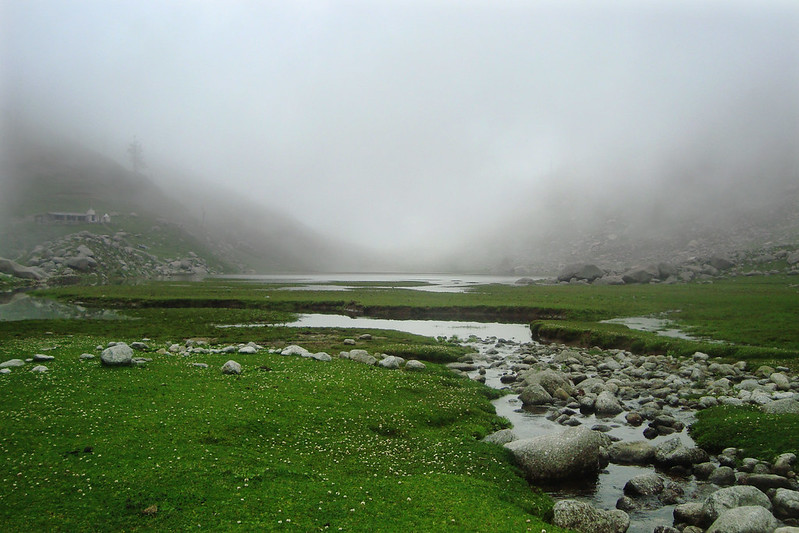
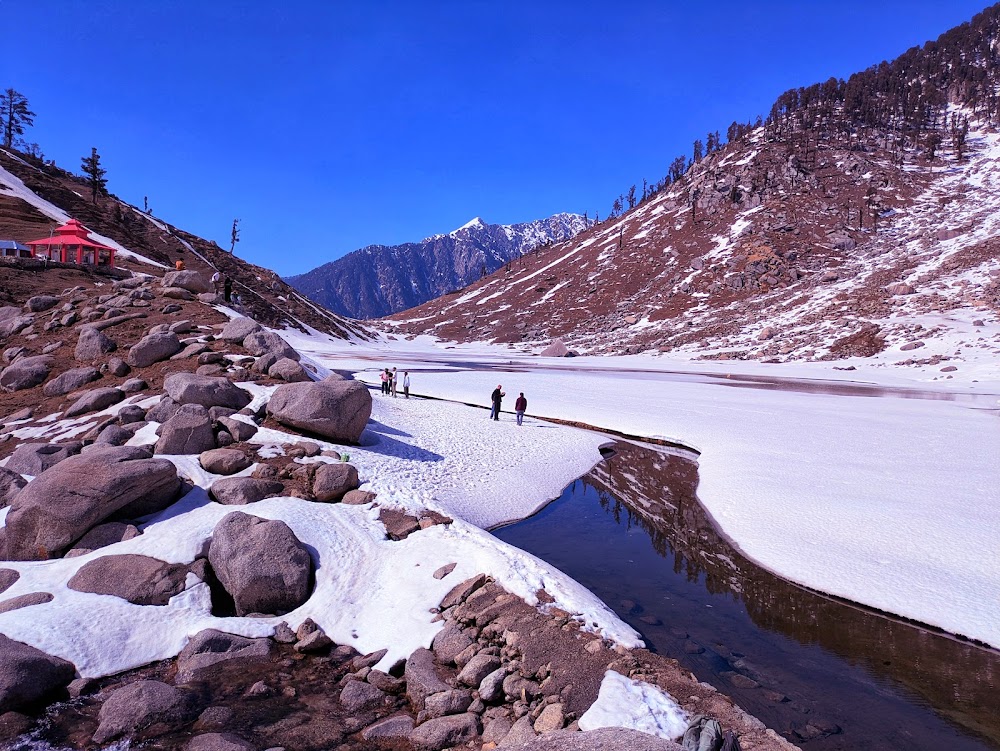
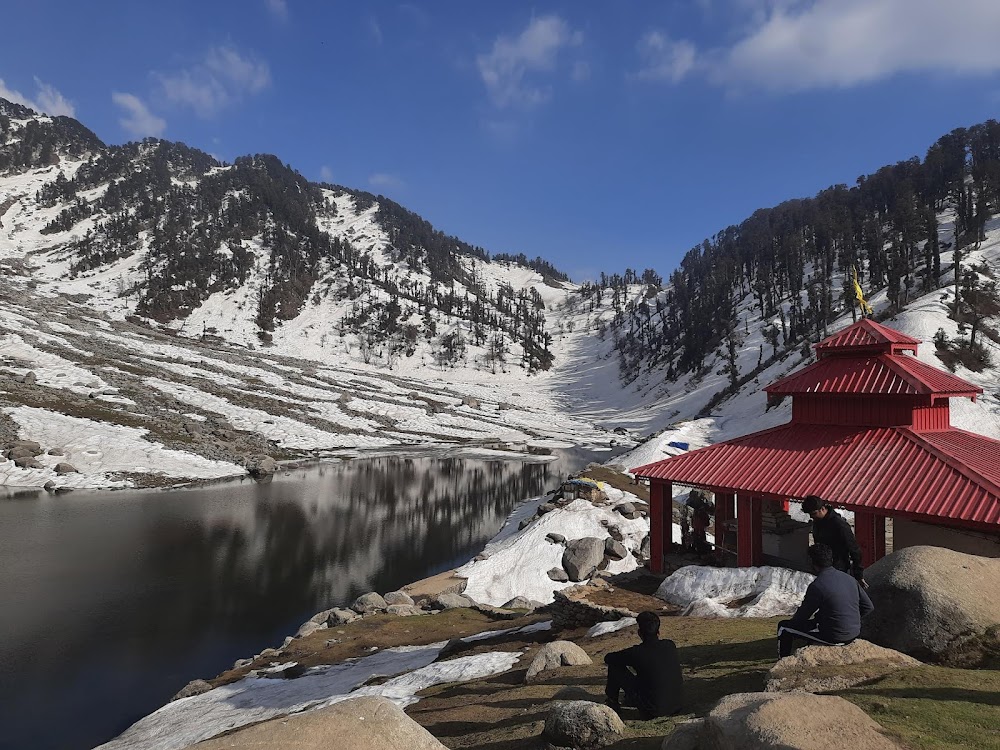
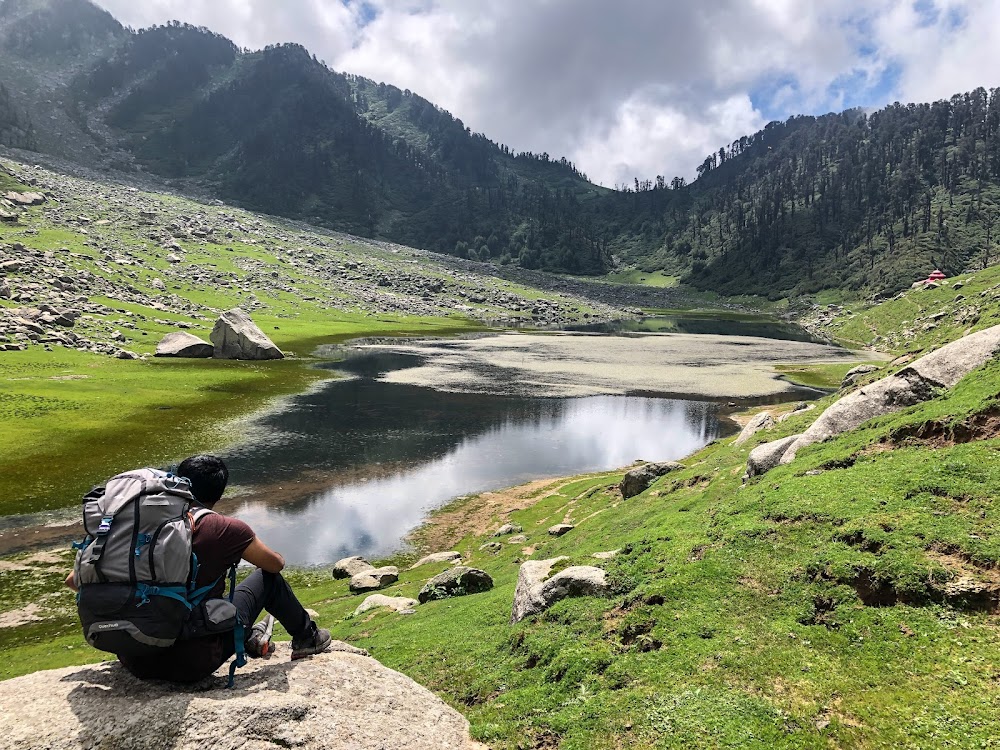
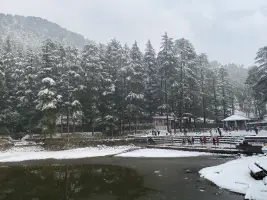
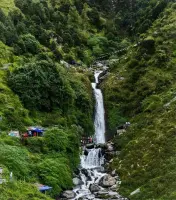
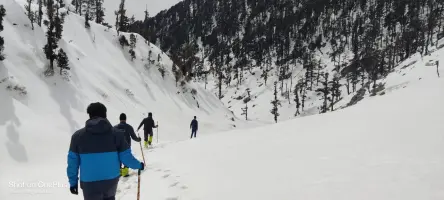
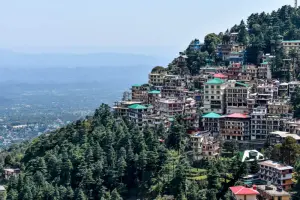
Kareri Lake sits at around 2,950 m, fed by melting snow from the Dhauladhar mountains. Unlike commercial treks, this one still feels local and unpolished—pine forests, rocky stream crossings, and open meadows dominate the trail. The lake itself is shallow, emerald-blue on clear days, and frozen in peak winters, offering a dramatic high-altitude experience without needing multiple days off.
The trek usually starts from Kareri Village and follows the Nyund stream almost throughout, making navigation intuitive. You’ll pass shepherd huts, wooden bridges, and seasonal grazing lands. Nights near the lake are silent and cold, with minimal light pollution—ideal for stargazing if weather allows. This trek is popular with budget travelers, solo hikers, and first-time high-altitude trekkers.
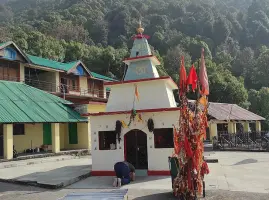
Kareri Lake is also culturally rooted—locals consider it sacred, and you’ll often see small shrines and prayer flags near the lake. Because it’s close to Dharamshala yet still relatively uncrowded, it strikes a rare balance between accessibility and wilderness.
| Location | Google Maps |
|---|
| By Type | Lake |
|---|---|
| By Location Features | On High-Altitude |
| By Settlement Type | In Remote Location |
⚠️ This content may be AI-generated and could contain misinformation. If you notice any issue or want to suggest edits, please let us know.