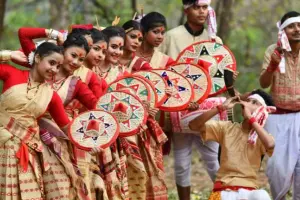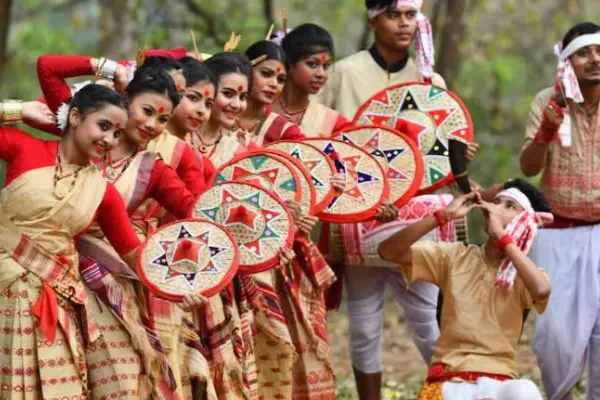
Bihu is the soul of Assamese culture, reflecting the agrarian lifestyle of the people. It is not one festival but three distinct festivals spread across the year, each holding social, cultural, and agricultural importance:
Rongali (Bohag) Bihu
Marks the Assamese New Year and spring.
Associated with joy, sowing season, and fertility.
Celebrated with Bihu dances, songs (Bihu geet), traditional games, and cultural gatherings.
Young people wear new clothes, visit homes, and seek blessings.
It is the most vibrant and popular Bihu, comparable to a new-year carnival.
Kongali (Kati) Bihu
A time of prayers and solemnity.
Lamps (saki) are lit in paddy fields and under tulsi plants to protect crops.
Farmers pray to the goddess of crops for a healthy harvest.
Marked with fewer festivities, focusing on hope and spiritual devotion.
Bhogali (Magh) Bihu
A harvest festival of plenty.
Known for Meji (bonfire) and Bhelaghar (temporary huts made of bamboo and straw).
Communities gather for feasts with rice cakes (pitha), sesame sweets, and fish.
Traditional games like buffalo fights and community dances are popular.
It symbolizes abundance and gratitude for a successful harvest.
Primarily in Assam (statewide, in both rural and urban areas).
Also celebrated in Assam diaspora communities across India (Delhi, Bangalore, Kolkata, Mumbai) and abroad where Assamese people live.
Rongali Bihu – Morning & Evening (dances, feasts).
Kongali Bihu – Evening (lighting of lamps in fields).
Bhogali Bihu – Full day and late night (bonfires, feasts, games).
Bihu festivals follow the Assamese calendar (based on the luni-solar system), and their dates are aligned with agricultural cycles:
Rongali (Bohag) Bihu – Celebrated in mid-April (around April 13–15) marking the Assamese New Year and the beginning of the sowing season.
Kongali (Kati) Bihu – Observed in mid-October (around October 18–20), symbolizing a period of prayer for a good harvest, when fields have crops growing but food stock is low.
Bhogali (Magh) Bihu – Celebrated in mid-January (around January 14–16), after the harvest, marked with feasting, bonfires, and community gatherings.
| By Type | Cultural Festivals , New Year Festivals , Harvest Festivals , Festival |
|---|---|
| By Scale | Regional |
| By Duration | Multi-Day |
| By Frequency | Quarterly |
⚠️ This content may be AI-generated and could contain misinformation. If you notice any issue or want to suggest edits, please let us know.