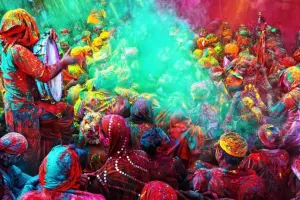
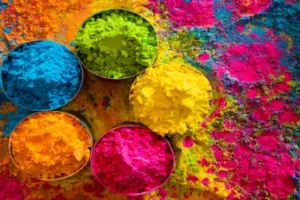
Holi is one of India's most joyous and colorful festivals, celebrated with great enthusiasm across the country. It marks the victory of good over evil, the arrival of spring, and the end of winter. People smear each other with gulal (colored powders), splash water, sing, dance, and enjoy festive treats like gujiya, thandai, and malpua.
The festival is deeply rooted in Hindu mythology, with stories of Prahlad and Holika symbolizing triumph over evil and Radha-Krishna’s playful love being a central theme.
📜 Mythological Significance of Holi
1️⃣ The Story of Holika and Prahlad
- King Hiranyakashipu, a demon king, wanted to be worshiped as a god.
- His son Prahlad, a devoted follower of Lord Vishnu, refused.
- The king’s sister Holika (who had a magical fireproof cloak) tricked Prahlad into sitting in fire with her.
- But divine intervention saved Prahlad, and Holika burned instead.
- This event is commemorated with Holika Dahan, where bonfires are lit on the night before Holi to signify the victory of good over evil.
2️⃣ Radha-Krishna and the Playful Colors of Holi
- It is believed that Lord Krishna, jealous of Radha’s fair complexion, playfully applied colors to her face.
- This fun tradition evolved into the colorful festival we know today.
🎊 How is Holi Celebrated?
1. Holika Dahan (Chhoti Holi) – The Bonfire Night
- Date: The night before Holi
- Ritual: A large bonfire is lit to symbolize the burning of Holika and the triumph of good over evil.
- People gather around, offer coconuts and grains, and perform rituals.
2. Rangwali Holi – The Festival of Colors
- Date: The main Holi celebration (Next day of Holika Dahan)
- Ritual:
- People throw colored powders (gulal) and splash water.
- Music, dance, and traditional sweets like gujiya, dahi bhalla, and thandai are enjoyed.
- Friends and strangers greet each other with "Bura na mano, Holi hai!" (Don't mind, it's Holi!).
🎭 Different Types of Holi Celebrations in India
Holi is celebrated in unique ways across different regions of India. Here are some famous variations:
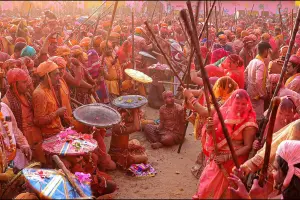
1️⃣ Lathmar Holi (Barsana & Nandgaon, Uttar Pradesh)
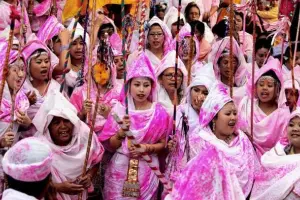
- Women playfully hit men with sticks (lathis) while men try to dodge them.
- This reenacts the playful teasing between Radha and Krishna’s villages.
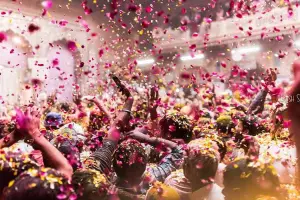
2️⃣ Phoolon Ki Holi (Vrindavan, Uttar Pradesh)
- Instead of colors, people shower flowers in temples, particularly at Banke Bihari Temple.
- This is a beautiful and peaceful way of celebrating Holi.
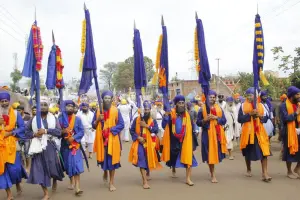
3️⃣ Holla Mohalla (Punjab)
- A Sikh version of Holi celebrated with mock battles, martial arts, and kirtans at Anandpur Sahib.
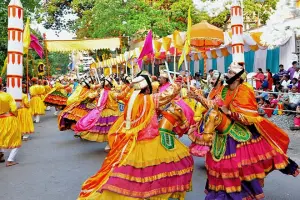
4️⃣ Shigmo (Goa)
- Goa’s spring festival, featuring parades, folk dances, and vibrant street performances.
5️⃣ Dol Jatra / Basant Utsav (West Bengal)
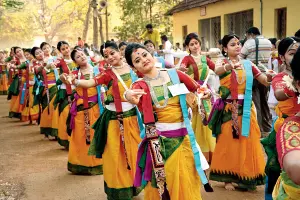
- Shantiniketan’s Basant Utsav is a cultural Holi celebration started by Rabindranath Tagore, where people wear yellow clothes and dance to Tagore’s songs.
6️⃣ Rang Panchami (Maharashtra & Madhya Pradesh)
- Celebrated five days after Holi, where the festival of colors continues, especially among Maharashtrians.
7️⃣ Yaoshang (Manipur)
- A six-day Holi festival mixed with Thabal Chongba, a special Manipuri dance.
8️⃣ Manjal Kuli (Kerala)
- Holi celebrated by the Konkani and Gaud Saraswat Brahmin communities with turmeric water instead of colors.
🛑 Holi Safety Tips & Responsible Celebrations
While Holi is a fun festival, it’s essential to be responsible:
✔️ Use organic colors to avoid skin allergies.
✔️ Respect others' consent – not everyone enjoys being drenched in colors.
✔️ Be cautious of intoxicants like bhang (cannabis-based drink) if you’re not used to them.
✔️ Keep your belongings safe as large crowds can lead to pickpocketing.
Here are some of the top destinations in India where people gather to celebrate Holi:
- Mathura & Vrindavan, Uttar Pradesh – Famous for Lathmar Holi in Barsana and Nandgaon, as well as grand celebrations at Banke Bihari Temple.
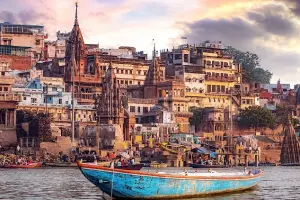
- Varanasi, Uttar Pradesh – A chaotic yet vibrant Holi experience with colors and festivities along the ghats of the Ganges.
- Barsana & Nandgaon, Uttar Pradesh – Known for the unique Lathmar Holi, where women playfully hit men with sticks.
- Shantiniketan, West Bengal – Celebrated as Basanta Utsav, introduced by Rabindranath Tagore with cultural performances.
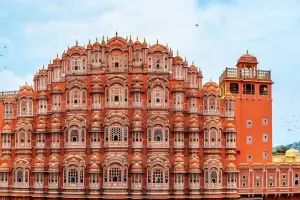
- Jaipur, Rajasthan – The Pink City hosts royal Holi celebrations with elephants, traditional music, and colors.
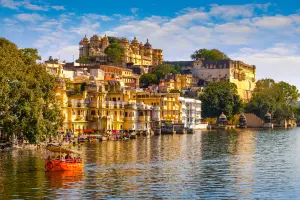
- Udaipur, Rajasthan – The Mewar Royal Holika Dahan at City Palace and vibrant street celebrations attract visitors.
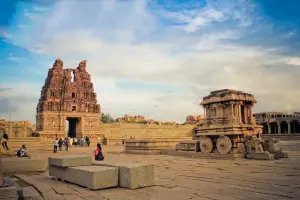
- Hampi, Karnataka – One of the rare places in South India where Holi is celebrated with grandeur, especially among backpackers.
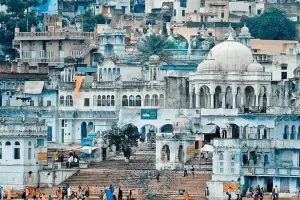
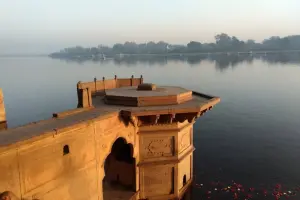
- Pushkar, Rajasthan – A favorite among international tourists, with an open-air Holi party in the streets.
- Delhi – The capital hosts large-scale Holi parties, including the famous Holi Moo Festival with music, colors, and festivities.
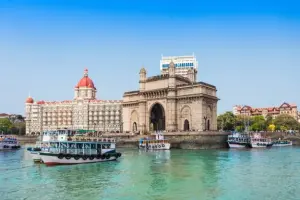
- Mumbai, Maharashtra – Known for Rang Panchami, where celebrations continue days after Holi with colors, music, and dance.
- Anandpur Sahib, Punjab – Hosts the Holla Mohalla, a Sikh festival showcasing martial arts and military displays alongside Holi.
- Goa – Celebrated as Shigmo, a mix of colors, folk dances, and street parades.
Holi is not just about colors—it’s about love, friendship, and the spirit of unity. Whether you're playing with colors in Mathura, witnessing Lathmar Holi in Barsana, or experiencing the elegance of Basant Utsav in Bengal, each region adds its own unique charm to this festival.
✨ Have you ever experienced Holi in India? Share your favorite Holi memories in the comments!