
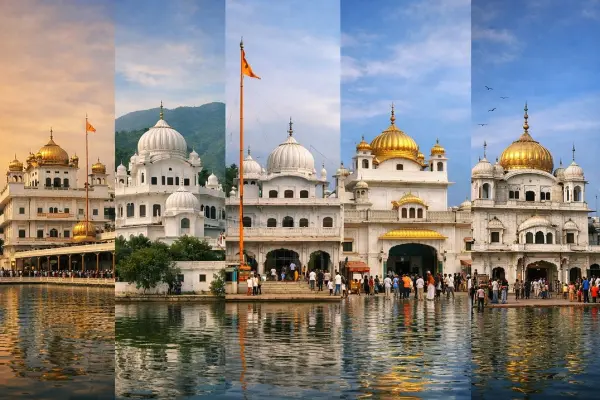
In Sikhism, a Takht (meaning “throne” or “seat of authority”) represents the supreme religious authority on temporal matters of the Sikh community. While the spiritual authority rests with the Guru Granth Sahib, the Takhts handle important decisions, traditions, and community guidance.
All five Takhts are located in India and are deeply connected to major historical events, especially those involving Guru Gobind Singh and the formation of the Khalsa. For travelers, these are not just religious sites but important heritage locations that shaped Sikh history.
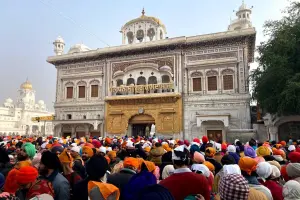
Standing opposite the Golden Temple, Akal Takht Sahib represents the temporal authority of Sikhism, symbolizing courage, justice, and spiritual sovereignty.
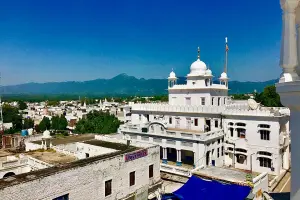
The birthplace of the Khalsa Panth, Keshgarh Sahib in Anandpur radiates courage and spiritual sovereignty — a living symbol of Sikh identity.
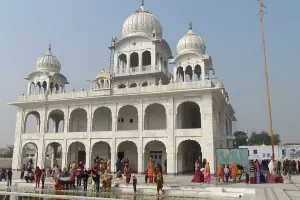
Known as the “Guru ki Kashi”, Damdama Sahib is where Guru Gobind Singh Ji compiled and finalized the Guru Granth Sahib, solidifying its status as the eternal Guru.
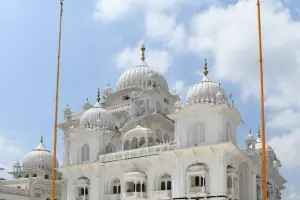
A sacred birthplace of Guru Gobind Singh Ji, Takht Sri Patna Sahib in Bihar stands as a shining testament to Sikh devotion and heritage beyond Punjab.
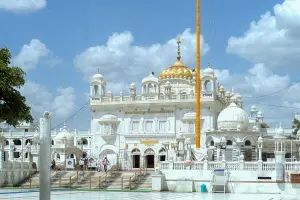
A sacred Sikh Takht built at the site where Guru Gobind Singh Ji, the tenth Sikh Guru, attained Joti Jot (merged with the Divine) — Hazur Sahib in Nanded stands as a beacon of faith and reverence.
Three Takhts are located in Punjab, while one each is in Bihar and Maharashtra. Visiting all five is considered spiritually significant for many Sikhs. These sites are well-connected by road and rail, and all offer accommodation and langar (community kitchen) facilities for pilgrims.