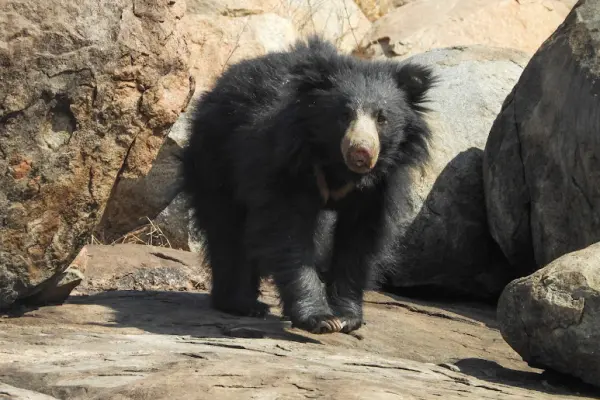
The Sloth Bear (Melursus ursinus) is one of the most distinctive and fascinating wild animals in India, known for its shaggy black fur, unique white chest mark, and long, curved claws. Unlike other bear species, sloth bears are insectivores, primarily feeding on termites and ants, using their specially adapted lips and lack of upper front teeth to suck up insects like a vacuum. They are nocturnal and elusive, making a sighting in the wild a rare and exciting experience for travelers.
Found in dry forests, grasslands, and scrub jungles across India, sloth bears are excellent climbers and often retreat to tree branches or caves during the day. Their unpredictable nature and occasional aggression towards humans make them one of India's more mysterious and misunderstood mammals. However, for wildlife enthusiasts, spotting a sloth bear in its natural habitat is a once-in-a-lifetime experience, especially in the forests of Karnataka, Madhya Pradesh, and Rajasthan.
✅ Unique Feeding Habits – One of the few bear species that mainly eat insects rather than meat or plants.
✅ Thrilling & Unpredictable Encounters – Known for its defensive aggression, making every sighting an adventure.
✅ Strong Cultural & Mythological Links – The character "Jungle Book's" Baloo was inspired by sloth bears.
✅ Active at Night – Best spotted during night safaris or early mornings.
✅ Exciting Wildlife Reserves – Found in tiger reserves, offering a chance to spot multiple big mammals.
✔ Best Time to Visit – Summer & post-monsoon (March to June, October to November) when food is scarce, making them more visible.
✔ Look for Termite Mounds & Honey Hives – Bears often forage in such areas.
✔ Go on Night Safaris – Most sloth bear activity happens after sunset.
✔ Stay Near Rocky Hills & Caves – They prefer these areas for shelter.
✔ Be Quiet & Observe from a Distance – Sloth bears have poor eyesight but an excellent sense of smell.
Sloth bears are one of India’s most unique and rare mammals, offering an exciting wildlife experience that differs from the usual tiger or elephant safaris. Their shaggy appearance, nocturnal habits, and fascinating behaviors make them a thrilling sighting for any nature lover. Whether watching a mother carrying her cubs or witnessing a bear tearing into a termite mound, spotting a sloth bear in the wild is an unforgettable and exhilarating moment! 🌿🐻🌙
| By Behavior & Lifestyle | Nocturnal Species , Predators & Carnivores |
|---|---|
| By Geographic Region | Western Ghats Wildlife |
| By Conservation Status | Vulnerable |
| By Natural Habitat | Terrestrial Species |
| By Type | Bears |
⚠️ This content may be AI-generated and could contain misinformation. If you notice any issue or want to suggest edits, please let us know.