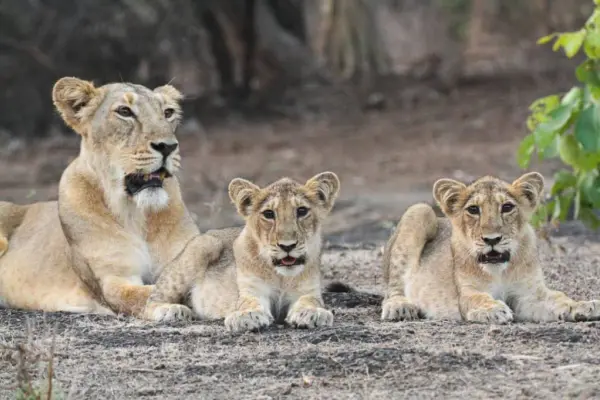
Gir National Park, also known as Sasan Gir, is the only place in the world where Asiatic lions roam freely in the wild. Spread across 1,412 sq. km, this dry deciduous forest, mixed with grasslands and rocky hills, is home to a diverse range of fauna and flora.
Location: Gujarat, India
Famous For: Asiatic Lions, Rich Biodiversity
Wildlife Species in Gir National Park
Mammals
- Asiatic Lion – The main attraction of Gir, with a population of over 600.
- Leopard – Often seen in the dense forests and hills.
- Striped Hyena – A nocturnal predator found in Gir.
- Golden Jackal – Frequently spotted scavenging in open areas.
- Indian Fox – A small and agile predator.
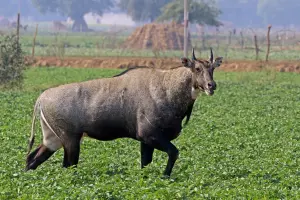
- Nilgai (Blue Bull) – India’s largest antelope, commonly seen in grasslands.
- Chinkara (Indian Gazelle) – A shy and graceful species.
- Sambar Deer, Spotted Deer (Chital), and Four-horned Antelope – Key herbivores of Gir.
Reptiles
- Indian Cobra – One of India’s "Big Four" venomous snakes.
- Russell’s Viper – Another highly venomous species.
- Marsh Crocodile (Mugger Crocodile) – Found in the Kamleshwar Dam.
- Monitor Lizard – Often spotted sunbathing on rocks.
Birds
- Crested Serpent Eagle – A raptor known for hunting snakes.
- Indian Pitta – A colorful and migratory bird.
- Painted Sandgrouse – Common in dry scrubland.
- Paradise Flycatcher – Notable for its long, flowing tail.
- Flamingos and Pelicans – Found near water bodies during the migratory season.
Best Time to Visit
The park remains open from mid-October to mid-June, with the best time for lion sightings being December to March. Summer (April–June) is ideal for spotting animals near water sources, while monsoons (July–September) are off-limits due to heavy rains and park closure.