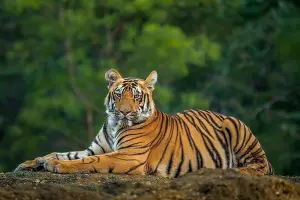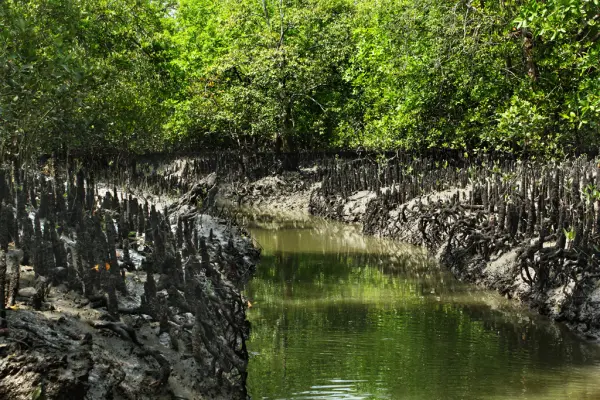
Sundarbans National Park, a UNESCO World Heritage Site, is the largest mangrove forest in the world, spanning across West Bengal, India, and Bangladesh. Covering approximately 10,000 sq. km, the park is a crucial habitat for the famous Royal Bengal Tiger, as well as a diverse range of wildlife including saltwater crocodiles, Ganges river dolphins, fishing cats, and Indian pythons. The name "Sundarbans" is derived from the Sundari trees that dominate this unique ecosystem.
The park is an intricate network of tidal waterways, mudflats, and small islands, making boat safaris the only way to explore its rich biodiversity. Birdwatchers can spot species like kingfishers, herons, storks, and eagles. With its vast wilderness and breathtaking landscapes, Sundarbans offers an unforgettable experience for nature lovers, adventure seekers, and wildlife photographers.
Since Sundarbans is a water-based park, boats are the primary means of transport.
By Ferry/Boat: Boats depart from Gothkhali Jetty (the nearest mainland point) and take you to various entry points of the park, Private and government-run boats operate from Canning, Namkhana, and Raidighi.
By Road + Boat: Visitors travel by car from Kolkata to Gothkhali (about 100 km, 3 hours) and then take a boat.
By Private Houseboat: Many luxury resorts offer guided boat tours with accommodation.
Once inside, safaris are conducted using motorboats or launches, as there are no land routes for vehicles.
| Location | Google Maps |
|---|
| By Type | National Park |
|---|---|
| By Popularity | Widely Popular |
| By Location Features | Near Waterbody , Near Coastal Region |
| By Settlement Type | In Remote Location |
⚠️ This content may be AI-generated and could contain misinformation. If you notice any issue or want to suggest edits, please let us know.