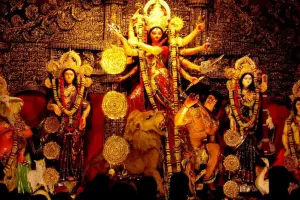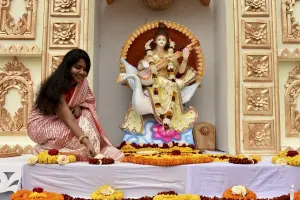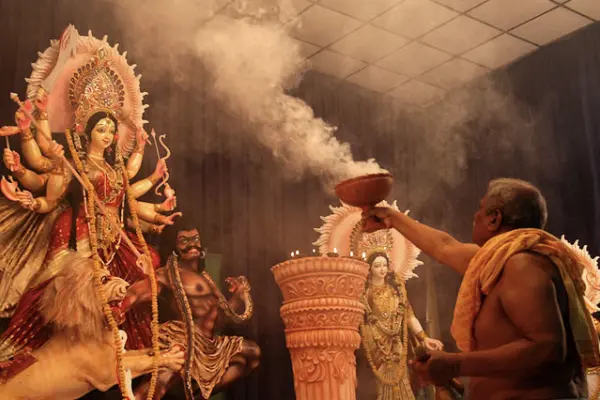
Durga Puja is not just a religious occasion but also a cultural and social celebration for Bengalis. It marks the annual homecoming of Goddess Durga along with her children – Lakshmi, Saraswati, Kartik, and Ganesha – from Kailash to her maternal home. Pandals (temporary decorative structures) are set up across cities and villages, housing beautifully crafted idols of the Goddess.
The festival spans several days, with Maha Saptami, Maha Ashtami, and Maha Navami being the most important, marked by rituals such as Pushpanjali (flower offerings), Sandhi Puja, Dhak (traditional drums), and cultural performances. The Maha Ashtami Sandhi Puja, performed at dusk, is considered the spiritual climax. On Vijayadashami, married women perform Sindoor Khela (smearing vermillion on each other) before bidding farewell to the Goddess, whose idol is immersed in rivers or lakes with great processions. Beyond devotion, Durga Puja is also a celebration of art, food, fashion, and community gatherings, making it a festival of identity for Bengalis worldwide.
Where it is celebrated in India: Primarily in West Bengal, Assam, Tripura, Odisha, Jharkhand, Bihar, and among Bengali communities across India and abroad.
Day-wise Rituals:
Shashthi – Unveiling of the Goddess’s face; beginning of rituals.
Saptami – Invocation of the Goddess; Nabapatrika Puja performed.
Ashtami – The most important day; Kumari Puja and Sandhi Puja held.
Navami – Final day of main worship with Maha Aarti.
Dashami (Vijayadashami) – Farewell rituals, Sindoor Khela, and idol immersion.
| By Type | Hindu Festivals , Historical Festivals , Cultural Festivals , Festival |
|---|---|
| By Scale | National |
| By Duration | Week-Long |
| By Frequency | Yearly |
⚠️ This content may be AI-generated and could contain misinformation. If you notice any issue or want to suggest edits, please let us know.