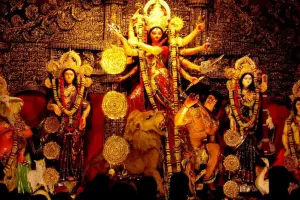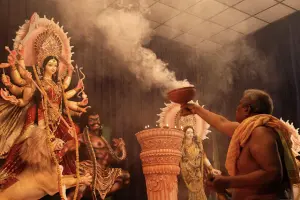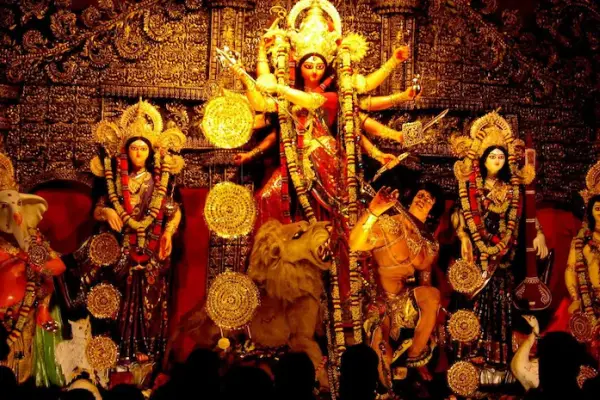
Sharad Navratri is the grandest Navratri, with both religious and cultural importance. It celebrates the victory of Goddess Durga over the buffalo demon Mahishasura, symbolizing the triumph of good over evil.
Why it’s celebrated: It honors Shakti (divine feminine energy) and the destruction of evil forces. It is also linked to Lord Rama’s victory over Ravana, celebrated on Dussehra.
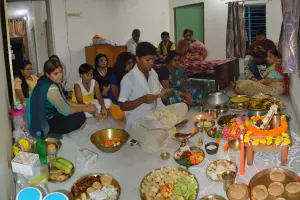
Significance: Considered the most auspicious period for worshipping the Goddess, devotees believe fasting and prayers during this time bring immense blessings, purification, and prosperity.
How it’s celebrated:
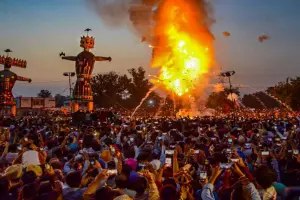
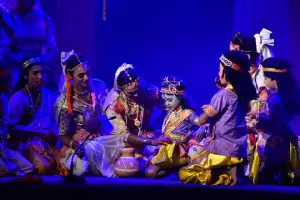
North India: People perform Durga Puja, keep fasts, recite Devi Mahatmya, and hold Ramlila plays depicting Rama’s life. On Dussehra, effigies of Ravana, Meghnath, and Kumbhkaran are burnt.
West Bengal, Assam, Odisha, Bihar, Jharkhand: Grand Durga Puja celebrations with beautifully crafted idols, pandals, cultural performances, and immersion of idols (Visarjan).
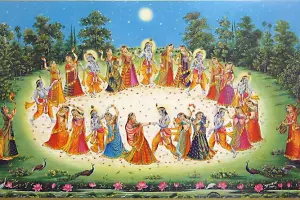
Gujarat & Maharashtra: Known for Garba and Dandiya Raas folk dances, performed every night.
South India: Homes are decorated with Bommai Golu (doll displays), and special pujas are conducted.
Where it’s celebrated: Nationwide, but most elaborately in West Bengal (Durga Puja), Uttar Pradesh, Delhi, Bihar, Gujarat, Maharashtra, Karnataka, Tamil Nadu.
Other events/festivals related: Vijaya Dashami (Dussehra), Durga Puja, Ramlila, Navratri Garba/Dandiya nights.
| By Type | Hindu Festivals , Historical Festivals , Cultural Festivals , Festival |
|---|---|
| By Scale | National |
| By Duration | Week-Long |
| By Frequency | Yearly |
⚠️ This content may be AI-generated and could contain misinformation. If you notice any issue or want to suggest edits, please let us know.