
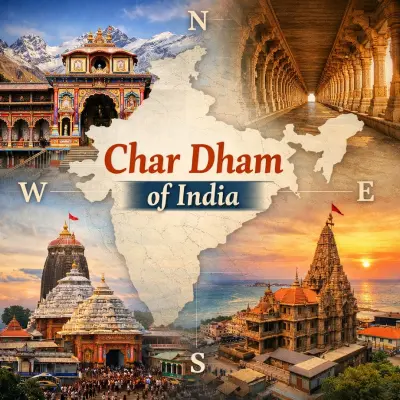
The Char Dham pilgrimage circuit includes Badrinath Temple (North), Ramanathaswamy Temple (South), Jagannath Temple (East), and Dwarkadhish Temple (West).
The concept was popularized by Adi Shankaracharya in the 8th century to unify pilgrimage traditions across India. The idea was simple: if someone visits all four, they symbolically cover the spiritual geography of the country.
Unlike the Chota Char Dham (Yamunotri, Gangotri, Kedarnath, Badrinath in Uttarakhand), this Char Dham spans the entire country and requires long-distance travel.
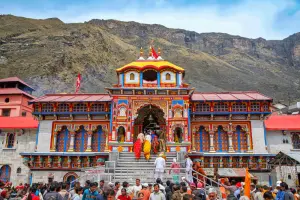
A major Hindu pilgrimage temple and part of India's 4 dham, dedicated to Lord Vishnu, located at 3,133 meters in Chamoli district of Uttarakhand.
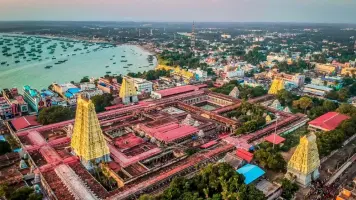
One of the holiest Shiva temples in India, famed for its sacred jyotirlinga and the world’s longest temple corridors.
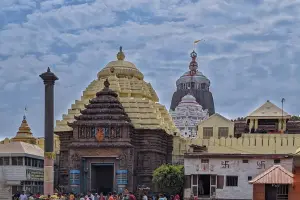
Shree Jagannatha Temple in Puri, Odisha, is one of the most revered Hindu temples dedicated to Lord Jagannath, a form of Vishnu. This 12th-century temple, known for its massive architecture, annual Rath Yatra (Chariot Festival), and spiritual significance, is a major pilgrimage site for Hindus and one of the Char Dham destinations.
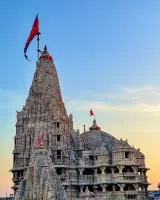
One of the Char Dham sites, Dwarkadhish Temple is a towering seaside shrine dedicated to Lord Krishna, believed to be his ancient kingdom.
Completing the Char Dham is logistically demanding because the temples are located in four distant corners of India. Most pilgrims complete it over multiple trips rather than in one journey.
Best planning tip:
This list is ideal for religious travelers, cultural explorers, and those documenting India’s major spiritual circuits.